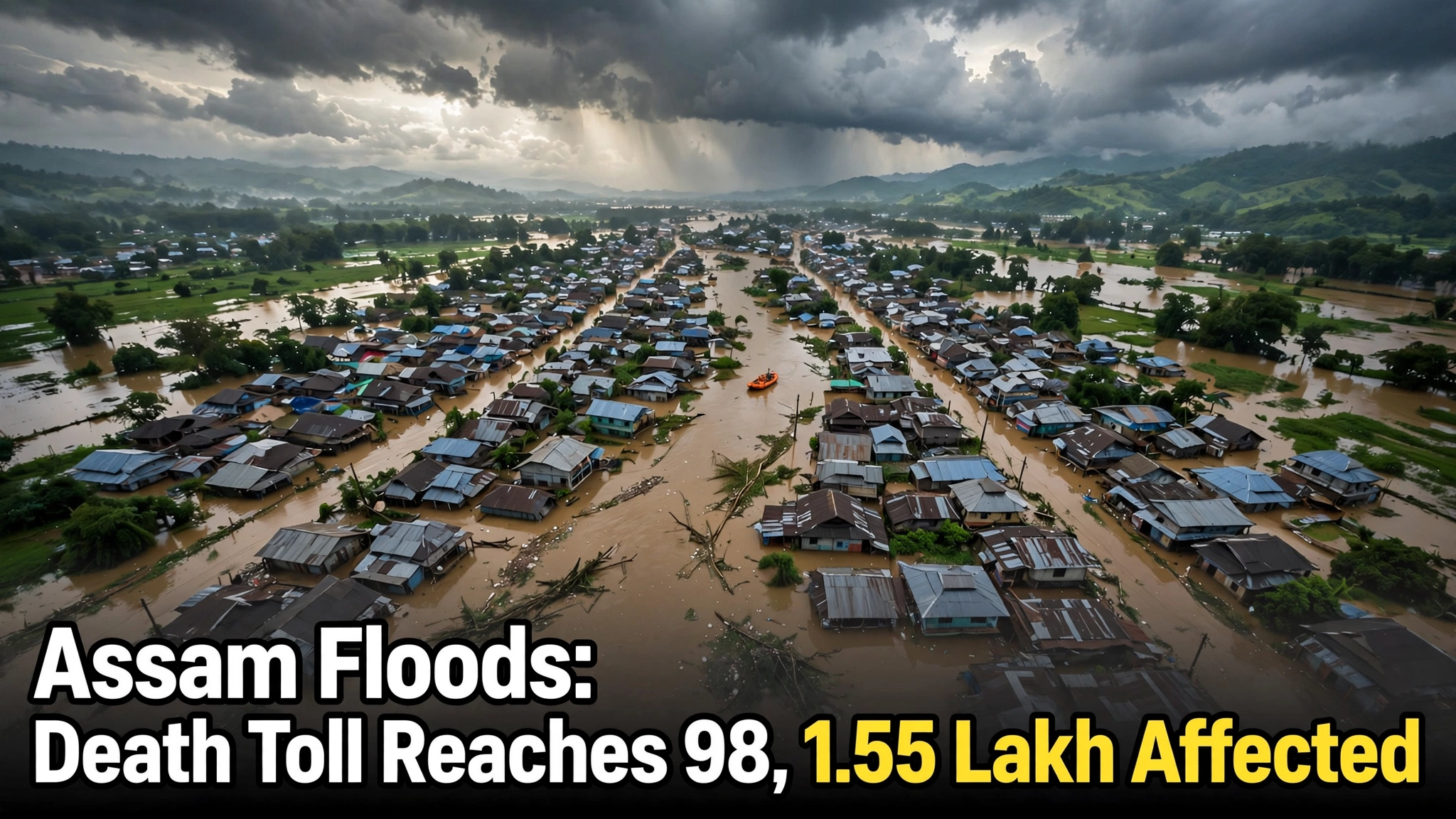
The Assam floods remain a serious concern, with the death toll from this year’s deluge reaching 98 and more than 1.55 lakh people still affected across 13 districts, according to the latest reports. The number of affected districts and people has declined from earlier peaks, but the situation remains difficult for thousands of residents dealing with damaged homes, disrupted transport and continuing water-related problems.
Authorities are now preparing for a detailed assessment of the damage as relief and recovery efforts continue across affected areas.
Assam Flood Death Toll Reaches 98
The death toll rose to 98 after another flood-related fatality was reported in Charaideo, according to reports citing the latest official flood bulletin.
Although the number of affected people has fallen to around 1.55 lakh, the crisis has not ended for communities still facing inundation and disruption.
The latest situation covers 13 districts, showing that the geographic spread of the flooding has narrowed compared with earlier stages of the monsoon disaster.
More Than 1.55 Lakh People Still Affected
The current figures show that over 1.55 lakh people remain impacted by the floods.
For affected families, the consequences extend beyond immediate flooding. Disrupted roads, damaged property, loss of agricultural output and interruptions to everyday economic activity can continue even after water levels begin to fall.
The reduction in the affected population is therefore encouraging, but it does not mean recovery is complete.
Authorities Begin Detailed Damage Assessment
The next major phase is shifting from immediate response toward assessing the damage caused by the floods.
Authorities have announced a door-to-door survey from August 9 to assess the impact and identify affected households.
Such assessments are important because relief and rehabilitation decisions depend on accurate information about:
- Damaged homes
- Agricultural losses
- Infrastructure damage
- Loss of livestock
- Disrupted livelihoods
- Other household-level losses
A detailed assessment can also help determine the scale of financial assistance required for recovery.
Why Assam Faces Recurring Flood Disasters
Flooding is a recurring challenge in Assam, particularly during the monsoon season.
The state’s geography, extensive river network and location within the Brahmaputra basin make many communities vulnerable to rising water levels.
The Brahmaputra and its tributaries can affect large areas when heavy rainfall causes river levels to rise rapidly.
The challenge is not limited to one season or one district. Assam’s flood management therefore requires a combination of early warning, infrastructure, evacuation planning and long-term resilience measures.
The Economic Impact Goes Beyond Immediate Damage
Floods can create a second wave of economic problems after the immediate emergency has passed.
Farmers can lose standing crops. Small businesses may remain closed. Roads and bridges can require repairs, while families can face unexpected costs for rebuilding homes and replacing essential belongings.
For rural communities, disruption to agricultural activity can be particularly damaging because the loss of one season’s production can affect household income for months.
This makes post-flood rehabilitation as important as rescue operations.
Relief and Rehabilitation Remain Critical
As floodwaters recede in some areas, authorities and relief agencies face the challenge of helping affected communities return to normal life.
The priorities include:
- Providing food and essential supplies
- Ensuring access to healthcare
- Restoring roads and basic infrastructure
- Supporting affected farmers
- Assessing damaged homes
- Helping families rebuild livelihoods
The recovery phase can take considerably longer than the emergency response itself.
Assam Needs Long-Term Flood Resilience
The latest crisis once again highlights Assam’s long-standing vulnerability to floods.
Emergency relief can save lives during a disaster, but long-term resilience requires investment in flood management infrastructure, early-warning systems, drainage, river monitoring and community preparedness.
Technology can also play a larger role. Better forecasting and real-time river-level monitoring can give communities more time to evacuate before conditions become dangerous.
What Happens Next?
The immediate focus will remain on affected communities and the assessment of damage.
The planned household survey should provide authorities with a clearer picture of the losses suffered during this year’s floods.
As the situation improves, attention will increasingly shift toward rehabilitation and restoring normal economic activity.
For residents, however, recovery will depend on how quickly essential services, roads, homes and livelihoods can be restored.
Final Thoughts
The Assam floods have once again demonstrated the scale of the state’s annual monsoon challenge. With 98 deaths and more than 1.55 lakh people still affected, the immediate emergency remains serious even as the geographic spread of flooding begins to decline.
The upcoming damage assessment will be crucial. Accurate information can help direct relief to families that need it most and lay the foundation for longer-term rehabilitation.
For Assam, the larger challenge is not simply responding to each year’s flood. It is building enough resilience to reduce the human and economic cost of the next one.
FAQ
What is the Assam flood death toll in 2026?
The death toll from this year’s Assam floods has reached 98, according to the latest reports.
How many people are affected by the Assam floods?
More than 1.55 lakh people remain affected across 13 districts.
Is the Assam flood situation improving?
The number of affected districts and people has declined from earlier levels, but thousands of people remain affected and recovery work is continuing.
When will Assam’s flood damage assessment begin?
Authorities have announced a door-to-door assessment from August 9 to evaluate damage and identify affected households.
Why does Assam experience severe floods?
Assam’s extensive river network, the Brahmaputra basin, heavy monsoon rainfall and vulnerable settlements contribute to recurring flood risks.