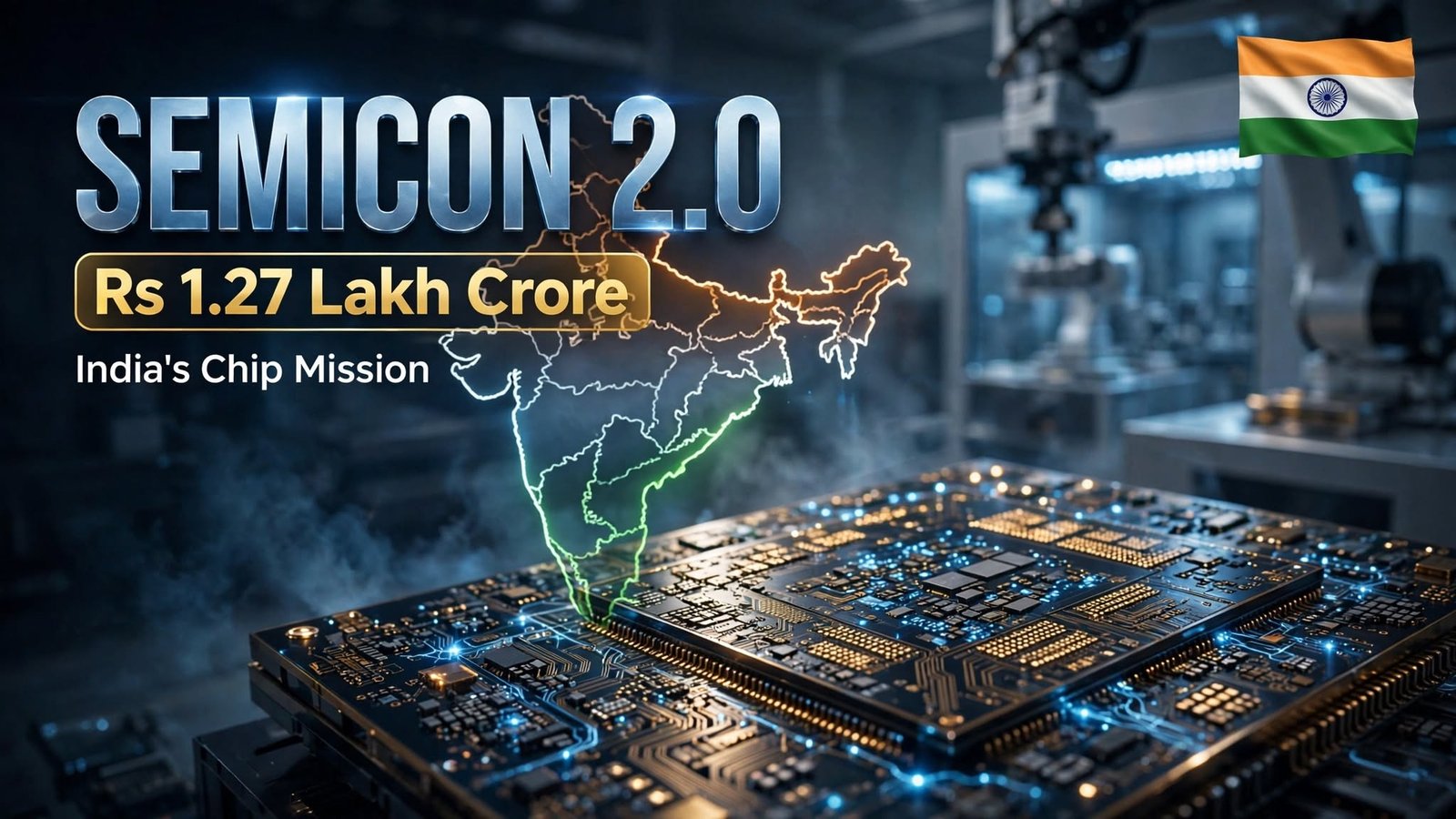
Rs 1.27 Lakh Crore Semicon 2.0 Launched to Boost India’s Chip Manufacturing Ambitions
The Rs 1.27 Lakh Crore Semicon 2.0 programme marks a major step in India’s push to establish a stronger and more self-reliant semiconductor ecosystem. The government has rolled out the next phase of its semiconductor strategy with a focus on expanding domestic chip design, manufacturing capabilities and strategic technology development.
The initiative is aimed at creating a more robust semiconductor value chain within the country while encouraging investments in advanced technologies. With semiconductors becoming critical to smartphones, automobiles, artificial intelligence, defence systems and data centres, strengthening domestic capabilities has become an important economic and strategic priority for India.
What Is Semicon 2.0?
Semicon 2.0 represents the next stage of India’s efforts to develop a competitive semiconductor industry.
The programme is designed to build on the country’s existing semiconductor initiatives by providing fresh incentives for strategic technology projects. Its broader objective is to encourage companies to establish and expand semiconductor-related operations in India.
The focus is not limited to chip fabrication. The programme also places importance on chip design and the wider ecosystem required to support semiconductor manufacturing.
Rs 1.27 Lakh Crore Programme Focuses on Strategic Technology
The scale of the Rs 1.27 Lakh Crore Semicon 2.0 programme underlines the government’s long-term commitment to the sector.
Semiconductor manufacturing requires significant capital, advanced technology, highly skilled professionals and a reliable supply chain. By offering incentives, the government hopes to reduce some of the barriers faced by companies looking to establish semiconductor operations in India.
The programme is expected to support strategic technology advancements and encourage greater participation from domestic and global companies.
Why Semiconductor Manufacturing Matters for India
Semiconductors are often described as the backbone of modern technology. Almost every major technology sector depends on chips, from consumer electronics and automobiles to telecommunications, artificial intelligence and defence.
India has traditionally been a major player in software and IT services but has had a relatively smaller presence in large-scale semiconductor manufacturing.
Building domestic manufacturing capacity could help reduce India’s dependence on imported chips and strengthen supply-chain resilience.
It could also create opportunities for Indian companies to move further up the technology value chain.
Push for a Stronger Chip Design Ecosystem
A key component of India’s semiconductor ambitions is chip design.
Indian engineers and technology professionals already have a significant presence in the global semiconductor design industry. Semicon 2.0 aims to strengthen the domestic ecosystem so that more design capabilities, intellectual property and advanced technology development can take place within India.
A stronger design ecosystem could also support the growth of startups working in areas such as artificial intelligence, automotive technology, telecommunications and high-performance computing.
Semiconductor Manufacturing Could Create New Jobs
The expansion of the semiconductor industry could have an impact beyond the companies directly involved in chip production.
Semiconductor manufacturing requires specialised equipment, materials, logistics, testing, packaging, engineering and maintenance services. As manufacturing facilities expand, supporting industries could also develop around them.
This could create opportunities for highly skilled workers as well as businesses involved in the broader electronics and technology supply chain.
India’s Semiconductor Ambitions and Global Competition
Countries around the world are competing to build resilient semiconductor supply chains.
The disruptions experienced by global industries in recent years highlighted the risks associated with heavy dependence on a limited number of manufacturing locations.
India is attempting to position itself as an important alternative destination for semiconductor and electronics manufacturing. Government incentives, a large domestic market and a growing technology workforce are among the factors that could support this ambition.
Semicon 2.0 is therefore significant not only for India’s domestic electronics industry but also for its broader position in the global technology supply chain.
What Semicon 2.0 Could Mean for Consumers
The immediate impact of the programme may not be visible to consumers because semiconductor manufacturing projects require years of investment and development.
However, over the longer term, stronger domestic chip capabilities could benefit sectors that depend heavily on imported components.
The programme could contribute to greater supply-chain stability, encourage local electronics production and help India develop more advanced technology capabilities.
A Long-Term Bet on India’s Technology Future
The Rs 1.27 Lakh Crore Semicon 2.0 initiative represents a long-term bet on India’s ability to become a significant semiconductor hub.
The success of the programme will depend on how effectively investments are converted into operational manufacturing facilities, advanced design capabilities and a reliable domestic supply chain.
If implemented successfully, the initiative could help India move beyond being primarily a consumer and designer of technology towards becoming a larger producer of the critical hardware powering the digital economy.
Key Takeaway
The Rs 1.27 Lakh Crore Semicon 2.0 programme aims to accelerate India’s semiconductor ambitions by supporting chip design, manufacturing and strategic technology development. The initiative could strengthen domestic supply chains, attract investment, create skilled employment and help India establish a stronger position in the global semiconductor industry.
FAQs
What is Semicon 2.0?
Semicon 2.0 is the next phase of India’s semiconductor development strategy, focused on strengthening domestic chip design and semiconductor manufacturing capabilities.
What is the size of the Semicon 2.0 programme?
The programme has been announced with an overall scale of Rs 1.27 lakh crore.
Why is semiconductor manufacturing important for India?
Semiconductors are essential for industries including electronics, automobiles, telecommunications, artificial intelligence and defence. Domestic manufacturing can help strengthen supply-chain resilience and reduce dependence on imports.
Will Semicon 2.0 support chip design?
Yes. Strengthening India’s domestic chip design ecosystem is an important part of the programme’s broader objectives.
Can Semicon 2.0 create employment?
The expansion of semiconductor manufacturing can generate highly skilled jobs while also creating opportunities across supporting industries such as equipment, testing, packaging, logistics and engineering.